The process, start to finish
How Peelable Surface Protection Works in NYC
First Layer applies temporary surface protection to finished surfaces before the work starts, checks it while the trades work and peels it off by hand at turnover. We install after hours, so the building never waits on us.
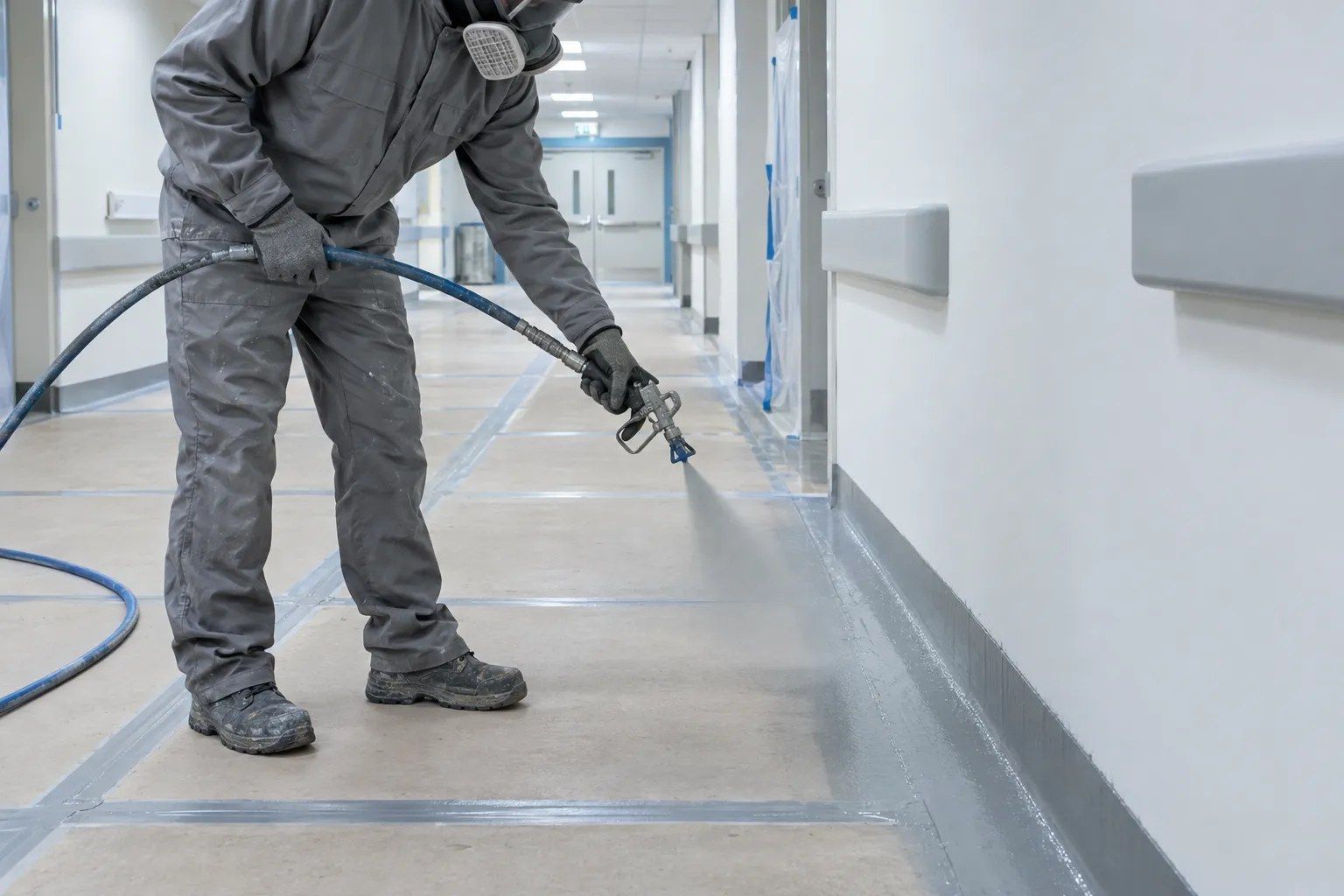
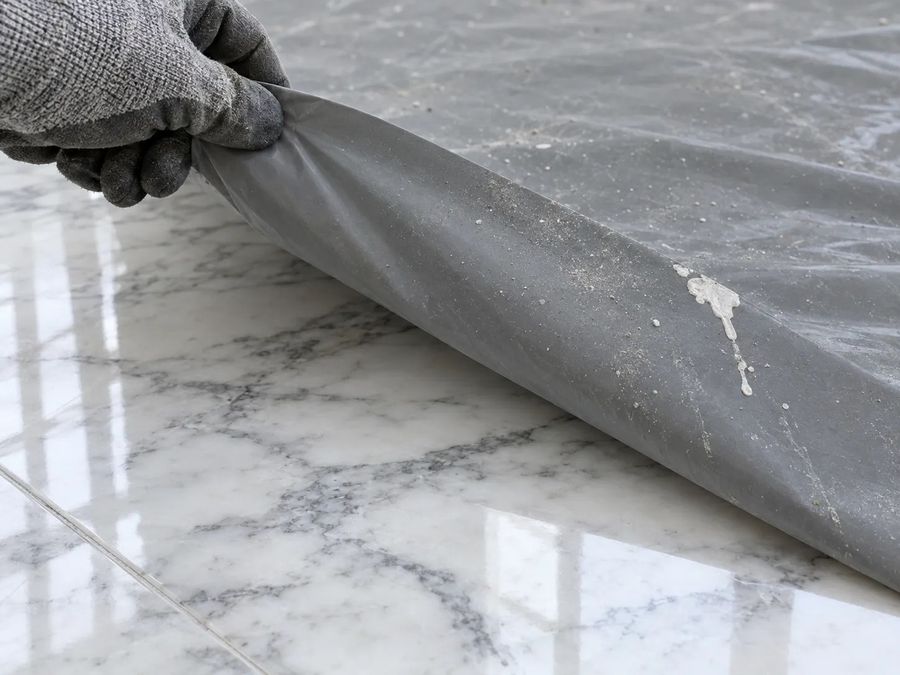
Five steps from site walk to handover
One crew runs the whole job. This is the order we work in, on every job.
Site walk
We walk the area with you. We note the surfaces, the delivery routes, the working hours and what has to stay open. Before we install, we photograph the area so existing damage is on record.
Test patch
Every new surface gets a test patch first. Polished marble and polished stone are approved for Peeltex. Historic or landmark finishes still get a test patch if the conservator asks for one.
After hours install
We clean, mask and spray in continuous coats, run up walls and edges so liquids cannot get underneath. Where heavy loads are expected, we add impact board first. The area is ready for the next business day.
Inspect and log
We check the protection while the other trades work, repair lifted or damaged spots and log each visit with dated photos. You get a photo log for the building.
Peel and hand over
We peel it off by hand in large sheets and clean up. Then we walk the area with you and compare it to the photos from before.
Not every surface is coated directly. Carpet gets carpet protection first, then Peeltex over it. Fabrics, fresh paint, bare brick, untreated wood and flaking surfaces are not coated directly. Loading docks, steel plates and elevator sills and tracks can be coated, with limits. Read where peelable coating doesn't go before you plan a job.
See it work
Two moments on a warehouse floor. The protection takes the hits, then peels off by hand.


These are test photos on a warehouse floor. They are not a First Layer client job. Read more about the product on our product page.
What to expect on a job
Protection only works if you can check it. Here is what you get, in writing and in photos.
Test patch results
Test patch results are documented with photos at application and at removal, so you see what the surface did before we commit to the full area.
A condition survey first
Before we install, we survey the area and photograph it. Existing damage is on record, dated, before the protection goes down.
A photo log
Each inspection, repair and touch-up goes in the log with a date and photos. You can see what happened and when.
Ready the next business day
We install after hours. The area is ready for use when the building opens, and tenants and trades keep working.
Removal by hand
We peel the coating off by hand in large sheets. We use no solvents, strippers, scrapers, heat or abrasion on finished surfaces.
This surface is protected by First Layer. Please don't remove.
Sample placard
You will see a placard
We mark protected surfaces with a placard like this one. Tenants, trades and building staff know the protection is there and leave it in place until handover day.
If something does get damaged, tell us. We find it on inspection, or you report it, and we repair it.
Questions about how it works
How does peelable surface protection work in NYC buildings?
First Layer sprays a peelable film on the finished surface after hours. It dries into a sealed layer that takes the scuffs, spills and dust of the job. We inspect it while the trades work, then peel it off by hand at turnover. The finish underneath is what the owner sees.
Why test a patch on a new surface?
Surfaces react differently from one another, so we test a patch on a new surface before we commit. Polished marble and polished stone are approved for Peeltex. Historic or landmark finishes still get a test patch if the conservator asks for one. If the patch shows a problem, we do not proceed.
How do you take the protection off?
We peel it off by hand in large sheets. We do not use solvents, strippers, scrapers, heat or abrasion on finished surfaces. Then we clean up and walk the area with you, comparing it to the photos taken before the job. Where we laid impact board, the board comes out too.
Can other trades work over the protection?
Yes, that is what it is for. Trades work on and around the protected surface while we inspect it. We ask them not to remove, cut or modify it, and the placard says so. If a trade damages it, we repair it. Heavy loads and dropped tools get impact board, because Peeltex alone has no impact rating.
How we make a floor non-slip
On floors we add fine grit for traction and slip resistance. Timing matters, so we follow the same method on every floor.
About 1 hour after coating
We broadcast the grit into the wet coat about 1 hour after coating, so it sticks without sinking in.
Fine sand or glass dust
A fine grit goes on top of the coat for traction.
Traction and slip resistance
The grit gives the floor traction while the protection is down.
Seven services, one crew
Use one, or put them together. Every service is temporary surface protection, run by the same crew with one point of contact.
1. Spray-applied protection
Peeltex Clear, Grey, White and High Humidity, sprayed on finished surfaces and peeled off at turnover.
2. Built protection
Our carpentry crew builds dust and separation walls, zipper doors and sealed openings, plywood and board boxes over fixtures and finished stone, column wraps, corner, door and frame guards, stair tread covers, floor runners, and storefront and sidewalk barricades.
3. Combined protection package
Spray plus built protection on one line item (Section 01 76 00), from one sub, with one person responsible.
4. Protection upkeep
A weekly or per-visit walk to inspect, repair and re-apply, with a short report to the GC or building manager.
5. Condition and damage records
Dated before, during and after photo logs by area and trade.
6. Turnover and removal
Peel, remove board, clean, and leave the space punch-ready on a scheduled date.
7. Adjacent-property protection
Before-construction condition photos of neighboring buildings, plus protection of their glass, storefronts, roofs and finishes.
Start with a site walk
Tell us the building, the surfaces and the schedule. We will walk it with you, then quote the job. We work in New York City, Long Island and the Northeast.