Water and Fire Cleanup Surface Protection
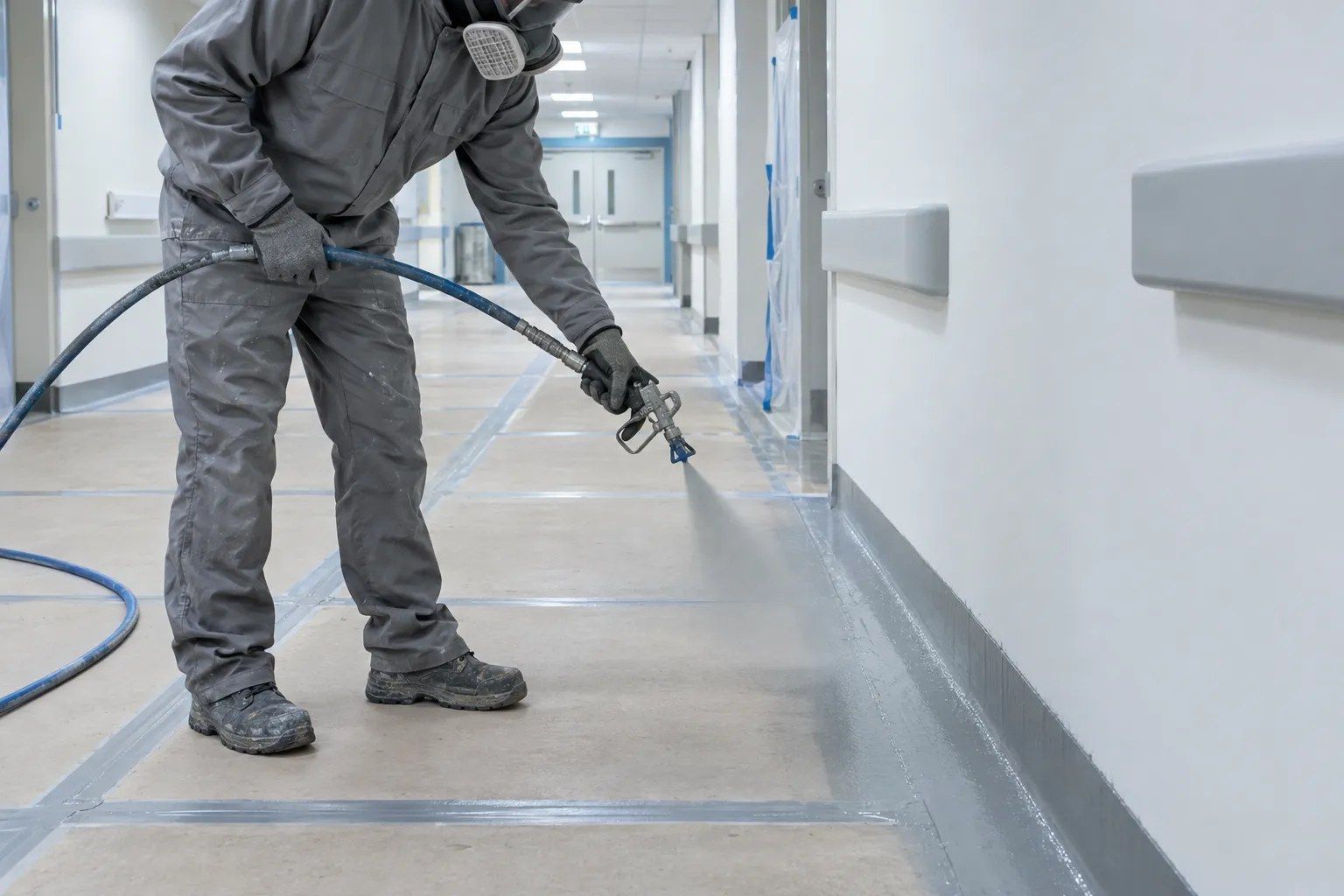
First Layer sprays and builds temporary surface protection over the finishes your cleanup crew is not touching, then peels it off when the work is done.
For water and fire cleanup contractors working in occupied buildings in New York and the Northeast.
What is protected during a cleanup job?
Cleanup work happens next to finishes that were not affected. First Layer protects those unaffected finishes during cleanup with temporary surface protection, so the areas around the work stay in the condition they were found.
Spray-applied protection (Peeltex) goes on floors, glass, metal and fixtures. Built protection from our carpentry crew closes off the work area with dust and separation walls, zipper doors and sealed openings. One crew handles both, and one person is responsible for the whole line item.
Surfaces next to the cleanup area
Finished floors
Peeltex Grey on sealed hard floors, with floor runners and board over routes your crew walks.
Glass and fixtures
Peeltex Clear on interior glass, mirrors and fixtures where you need to see the surface.
Stone and metal
Polished marble and stone take Peeltex Grey. Stainless and finished metals take Peeltex Clear.
Doors, corners and openings
Door and frame guards, corner guards and sealed openings around the area being cleaned.
Spray plus built protection, from one crew
The lead service for cleanup contractors is spray plus built protection. We spray the finishes that can take Peeltex and build the barriers around them: temporary dust and separation walls, zipper doors and sealed openings.
Plywood and board boxes cover fixtures, equipment and finished stone. We can add protection upkeep, a weekly or per-visit walk to inspect, repair and re-apply damaged protection, and condition and damage records with dated before, during and after photos by area.
Per job
Quoted by square foot, linear foot or opening. Book a site walk and we quote from what we see.
Product only
Peeltex through Strata Shield Supply, with crew training, if your own crew applies it.
Rental
Reusable door guards, corner guards and stair covers, installed and collected.
Combined package
Spray and built protection on one line item, written to the Section 01 76 00 spec we prepared.
One crew, one point of contact, five steps
Every job follows the same five steps, whether it is one corridor or a whole floor.
Removal timing is written into every job, so film is not left on past its rated life.
-
Site walk
We walk the affected and unaffected areas with you, mark what gets protected and agree the plan for the job.
-
Test patch on a new surface
Where a surface is new to us or delicate, we test a small patch before full application.
-
Install
We spray and build the protection in the agreed areas.
-
Inspect and log
We inspect the protection, repair what is damaged and keep dated photos by area.
-
Peel and hand over
We peel the film, remove board, clean up and leave the space punch-ready on the scheduled date.
Surface rules for cleanup work
Some surfaces take protection directly and some do not. These rules go into every quote.
What can be coated
- Sealed hard floors, polished marble and stone: Peeltex Grey.
- Interior glass, mirrors, stainless and fixtures: Peeltex Clear, interior only.
- Concrete, including precast: Peeltex High Humidity, after a moisture test.
- Carpet: Koruser or Axiom carpet protection first, then coated over it.
What to check first
- No published heat rating, so we apply after any baking or curing.
- Fine sand or glass dust is broadcast on floors about 1 hour after coating, for traction.
- Polished stone is approved, with a test patch only if the conservator asks.
- Tell us at the site walk which surfaces were affected so we keep them out of the plan.
Where it does not go directly: bare brick, untreated wood and other porous surfaces, and heat sources. We use board, film or mats instead. See where protection does not go.
Cleanup protection, answered
What does First Layer protect on a water or fire cleanup job?
We protect the finishes that were not affected, such as floors, glass, stone, metal and fixtures, with temporary surface protection while your crew cleans. Built protection closes off the work area with dust and separation walls, zipper doors and sealed openings.
Do you use spray, built protection or both?
Both, from one crew. Spray-applied protection (Peeltex) covers the finishes that can take it, and our carpentry crew builds walls, boxes, guards and floor runners. See how it works.
Can you coat bare brick, untreated wood or other porous surfaces?
Not directly. Bare brick, untreated wood and other porous surfaces are not coated. We use board, film or mats on them instead. There is no published heat rating either, so we apply after any baking or curing.
How do I get a quote?
Book a site walk. Jobs are quoted by square foot, linear foot or opening, and we quote from what we see. You can also compare the First Layer packages.
Walk the job with us before cleanup starts
Tell us what was affected and what was not. We mark what gets protected, set the removal date and give you a quote.