Historic Restoration Floor Protection in NY
First Layer sprays temporary surface protection on window glass and on finished floors under board, after hours, in New York and the Northeast. Polished marble and polished stone are approved for peelable protection. Historic or landmark finishes still get a test patch if the conservator asks for one.
For preservation architects, conservators, general contractors, restoration contractors and owners.
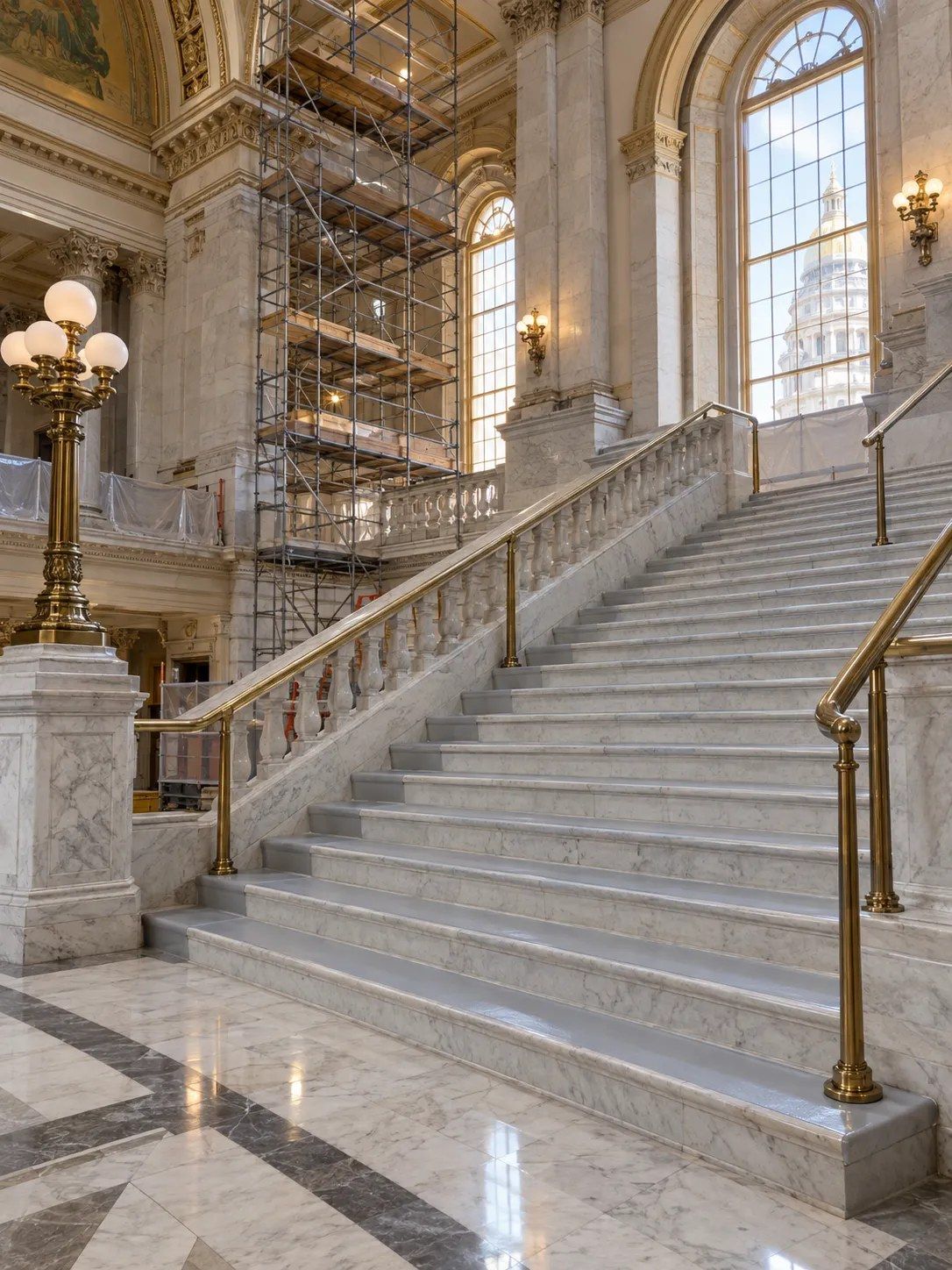
Where protection goes on a historic job, and where it does not
Historic fabric does not forgive a bad guess. So every surface sorts into one of three answers: yes, test first, or no. Glass and finished floors under board are a yes. Polished stone is approved, and landmark finishes get a test patch if the conservator asks for one. Porous and fragile finishes are a no, because peeling could pull the finish off with it.
Yes
Goes on, with the usual site walk.
- Window glass, old and new Clear inside, High Humidity outside. It keeps mortar, cleaning chemicals and paint off the glass during facade work.
- Finished floors under board Peeltex Grey goes on top of the board and seals the seams. A spill stays on top where you can see it, instead of soaking through to the historic floor. Nothing goes between the board and the floor.
Glass work on the outside of the building: facade glass protection.
Test first
Approved for Peeltex. Test patch if the conservator asks.
- Polished marble, granite, sealed terrazzo Clear on walls and stairs, Grey on floors. On historic or landmark finishes, we test a patch if the conservator asks for one. For floors, we broadcast fine sand or glass dust into the wet coat about 1 hour after coating, for traction and slip resistance.
- Stainless and finished metal Clear. We test a patch on a new surface before we go further.
Stone floors and stairs in lobbies: lobby and stone protection.
No
Stays uncoated.
- Bare brick and other porous surfaces Not coated directly. We use board, film or mats instead. Concrete can take Peeltex High Humidity after a moisture test.
- Plaster, gilding, decorative paint, shellac, wax, old wallpaper Peeling could lift the historic finish.
- Leaded and stained glass, flaking paint Too fragile. The peel can pull material off, unless a conservator approves.
The full list is on where peelable protection does not go.
If the conservator asks for a test patch
Polished marble and polished stone are approved for peelable protection. Historic or landmark finishes still get a test patch when the conservator asks for one, and we run it the same way every time.
-
Patch a hidden area
We put a small test patch where nobody will see it.
-
Peel and photograph
We peel it off and photograph the surface underneath.
-
Conservator reviews
The conservator looks at the result and decides how to proceed.
Four people decide what touches a historic building
Preservation architects and conservators
You set what is allowed on the fabric. We run the test patch and bring the photos, so you decide on what you can see.
GCs and construction managers
You buy the protection and answer for damage. We spray after hours, inspect during the job and peel at turnover.
Restoration contractors
Masonry, window, stone and decorative painting crews need the finishes next to their work covered. We protect them, with a test patch if the conservator asks.
Owners
You sign off on what touches your building. We walk the site with you, show the patch and quote the job.
Historic restoration protection, answered
Do you test before protecting historic marble or stone?
Polished marble and polished stone are approved for Peeltex. On historic or landmark finishes, we run a test patch if the conservator asks for one: a small patch in a hidden area, peeled and photographed for the conservator to review. We also test a patch on any new surface.
Which historic surfaces can you not protect?
Bare brick and other porous surfaces are not coated directly. Concrete can take Peeltex High Humidity after a moisture test. Plaster, gilding, decorative paint, shellac, wax and old wallpaper are out too, since peeling could lift the finish. Leaded and stained glass stay off unless a conservator approves. See where peelable protection does not go.
How do you protect a historic floor that is already under board?
Board alone can shift, and its seams let spills and dust through to the floor beneath. We spray Peeltex Grey on the top of the board, which seals the seams. A spill then stays on top, where you can see it and wipe it up. We put nothing between the board and the finished floor.
How is historic restoration protection priced in New York?
It depends on the surfaces, the area, the test patch and your schedule. Every quote covers material, labor, mobilization and a minimum job charge. Book a site walk and we quote from what we see. Stone floors and stairs are quoted under the Lobby and Stone Package.
Walk the building with us before anything goes on
Tell us what is being restored and who is on site. We sort the surfaces, agree any test patch your conservator wants and quote the job.