Art Studio Floor Protection in NY
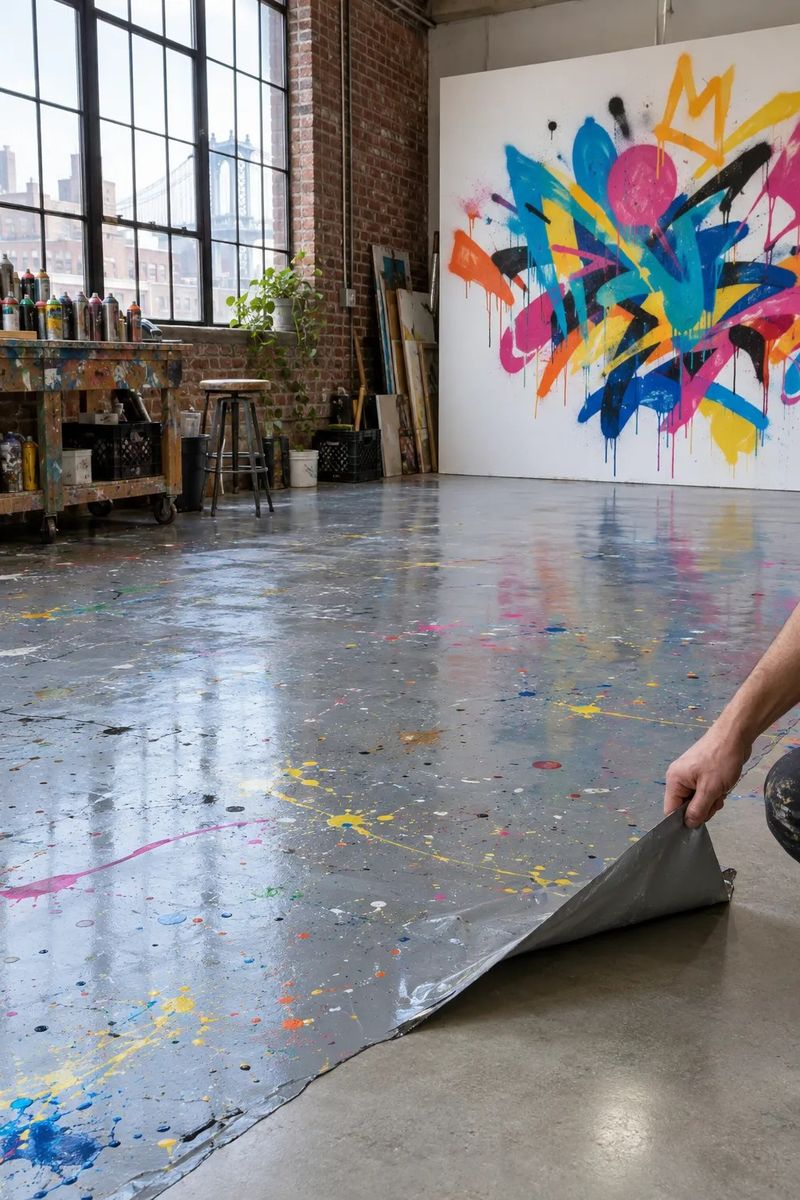
First Layer sprays temporary surface protection on studio floors and walls after hours, so each tenant gets a fresh, protected surface. When they move out, the coating peels off in one sheet and takes the mess with it.
How does studio floor protection work?
Studio floor protection means giving every tenant a fresh surface and taking it away, mess included, when they leave. First Layer sprays a peelable protective film onto sealed concrete or resilient studio floors in New York. We apply after hours, so the space is ready when the new tenant arrives. Paint, clay slip and glaze land on the film instead of the floor. At move-out, the coating peels off in one sheet. No scraping, no grinding, no repainting a floor the last tenant used hard.
Peeltex Grey goes on floors. Peeltex White covers paint walls and spray rooms, and Peeltex Clear covers glass and stainless. We test every new surface first. Read about the protection film.
One tenant, five steps
The surface goes down before the tenant moves in and comes up after they leave. Here is the cycle from our side.
-
Move in
Coat
Site walk and test patch, then we spray after hours.
Before: bare surface -
Work
Make a mess
Paint, clay slip and glaze land on the film. We inspect it as the space is used.
Film takes the hits -
Move out
Clear the work
The tenant takes their work and tools. The film is still down, with the mess on it.
Mess still on top -
Peel
Peel it off
The coating comes up in one sheet and takes the mess with it.
Mess gone -
Hand back
Next tenant
The surface underneath is handed back, ready for the next move-in and the next coat.
After: clean surface
Which product goes where
Each part of a studio gets its own product. Clear is interior only. High Humidity is for outdoors.
| Area | Peeltex | What to know |
|---|---|---|
| Studio floors (sealed concrete, resilient flooring) | Grey | A seamless film. Spills stay on top, and worn spots can be repaired. For traction, we broadcast fine sand or glass dust into the wet coat about 1 hour after coating. |
| Paint walls and spray rooms | White | Built to catch overspray and peel away. We test the peel on painted walls first. |
| Glass, stainless sinks and tables | Clear | Dries clear, so you still see the surface underneath. Interior only. |
| Outdoor or public art during install | High Humidity | Exterior grade, about 12 months outdoors. |
| Finished sculpture indoors (storage, shipping, install) | Clear | Protects finishes until unveiling. Test on patina and wax first. |
Know before you specify
This protection is not for every surface or every shop. These are the limits. See where peelable coating does not go.
-
No published heat rating
Keep it away from kilns, glory holes, torches, welding and foundry pours.
-
Not for raw surfaces
Untreated wood, raw plywood and other porous surfaces are not coated directly. Concrete takes Peeltex High Humidity after a moisture test.
-
Solvents get a test
Oil painters use mineral spirits and turpentine. We test how the film holds up before a full install.
-
Painted walls get a peel test
We test the peel on existing wall paint so it does not lift the paint underneath.
-
Patina and wax get a test
Test on patinated and waxed finishes before you protect them for shipping.
-
Not impact protection
Peeltex alone has no impact rating. Heavy loads and dropped tools need an impact layer under it.
Art studio floor protection questions
What does art studio floor protection cost in New York?
Each quote covers material, labor, mobilization and a minimum job charge. The size of the floor, the walls you want covered and your schedule shape the number. Book a site walk and we price what we see in the space instead of guessing from a phone call. We do not print rates online.
Can any studio floor be protected?
Peeltex Grey suits sealed concrete and resilient flooring. Raw plywood, untreated wood and other porous surfaces are not coated directly. Concrete takes Peeltex High Humidity after a moisture test. Carpet is not coated directly: we lay Koruser or Axiom carpet protection first, then coat over it. We test a patch on a new surface first.
Is it safe near kilns, torches and welding?
No. There is no published heat rating, so keep it away from kilns, glory holes, torches, welding and foundry pours. We plan those zones out at the site walk. Solvents such as mineral spirits and turpentine also get a test patch before we commit to a full install.
How does the peel work when a tenant moves out?
At move-out the coating comes off in one sheet and takes the mess with it. On painted walls we test the peel first so it does not lift the paint underneath. Peeltex Grey is touch dry in about 2 hours in optimal conditions. Walk on and cure times are not published, so we schedule around the site walk.
Need the product itself? Strata Shield Supply sells Peeltex. Call to order.
Visit Strata Shield SupplyWalk your studio with us before the next move-in
Tell us the space, the surfaces and the changeover date. We will look at it and quote the work.
Also see stage floors for film, TV and theater.